
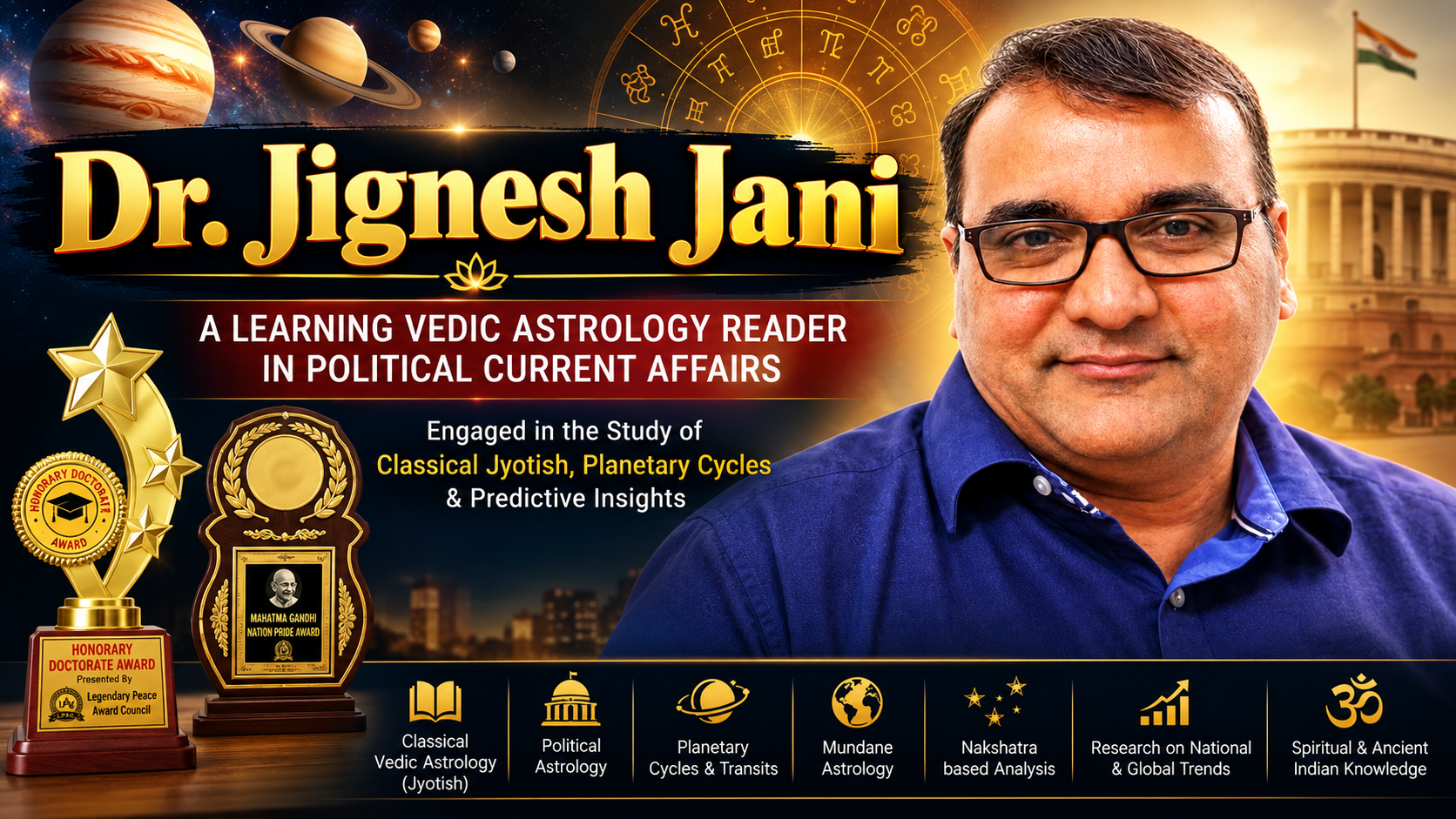
Ahmedabad | July 10, 2026: Vedic astrology researcher Jignesh Jani has shared his observations on the symbolic significance of the current Mars–Rahu alignment, commonly known in traditional Jyotish as Angarak Yoga. According to Jani, many Vedic astrologers interpret this planetary combination as representing a period of heightened energy, strategic competition, and increased geopolitical activity, while emphasizing that such interpretations should not be viewed as scientific predictions.
Jani explained that Mars has traditionally been associated with courage, action, defense, and determination, whereas Rahu is linked with ambition, uncertainty, and unconventional developments. When these two planetary influences combine, many astrologers believe they symbolically reflect periods marked by intensified political discussions, military preparedness, and major strategic decisions among nations.
He also referred to the Saturn–Neptune alignment, which many astrological traditions associate with institutional reforms, changing ideological landscapes, and long-term structural transformation. According to Jani, these symbolic planetary patterns are often studied together to understand broader collective cycles rather than individual geopolitical events.
Discussing the present international climate, Jani noted that countries across the world are facing economic challenges, evolving diplomatic relationships, technological competition, and regional security concerns. He believes that astrology can provide a symbolic lens through which some people interpret these developments, while acknowledging that real-world outcomes depend entirely on human actions and policy decisions.
Jani further highlighted Jupiter’s importance in Vedic astrology, describing it as a symbol of wisdom, ethics, justice, and diplomacy. Many practitioners regard Jupiter as a balancing influence that encourages peaceful negotiations, responsible governance, and constructive international dialogue during uncertain times.
“Astrology should never be considered a scientifically verified tool for predicting wars or geopolitical outcomes,” Jani said. “It is a traditional system of symbolic interpretation that invites reflection on broader human and societal cycles. The future will always be shaped by the decisions of governments, international institutions, and world leaders.”
Concluding his remarks, Jani encouraged readers to approach astrological discussions responsibly while supporting diplomacy, international cooperation, and evidence-based analysis as the foundations for lasting global peace and stability.