
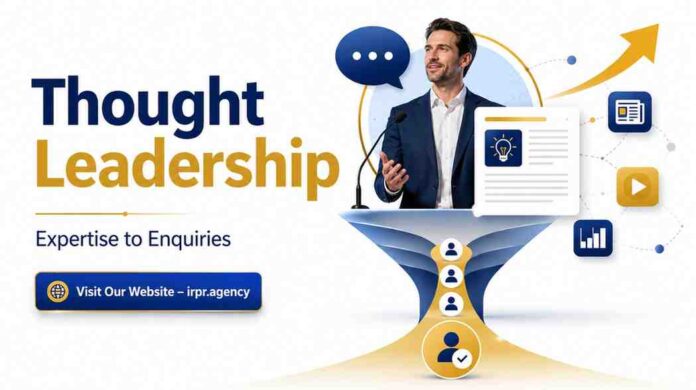
Many businesses have genuine expertise but communicate it too late in the buyer journey. They rely on a sales call to explain what makes them different, even though buyers are already comparing options, evaluating risk and looking for signs of credibility online.
Thought leadership closes that gap. It turns informed opinions, practical explanations and real-world experience into content that helps audiences understand a category before they are ready to enquire. A clear media relations strategy can help valuable ideas reach beyond owned channels, while a well-planned business summit gives a company a stronger platform to convene customers, partners and decision-makers around an important industry conversation.
Start With Questions Buyers Already Ask
Effective thought leadership does not begin with “What should we post?” It begins with the questions prospects ask when they are uncertain. These could concern pricing, timelines, quality, compliance, implementation, category trends or the risks of making the wrong choice.
The strongest answer is specific and useful. A founder’s perspective on market change, an engineer explaining a complex process, or a specialist addressing a common misconception can create a reason to trust the business before the first call. Long-form conversations can become more usable when supported by podcast video editing, helping teams create an anchor episode alongside short clips, captions and platform-ready versions.
Build Credibility Through Proof, Not Promotion
Thought leadership should make the audience smarter, not merely repeat brand claims. For example, a cause-led organisation may use clear brand identity guidance for rural-development NGOs to connect its mission, proof of impact and audience confidence. A B2B organisation may explain how its product works through industrial animation, making technical value easier to understand without oversimplifying it.
A useful thought-leadership system usually includes:
- One clear point of view, credible evidence, an identifiable expert and a practical next step.
Put Expertise Where Your Audience Pays Attention
Owned content builds a foundation, but visibility increases when expertise appears in relevant environments. A planned expert interview format can help a spokesperson communicate a useful perspective in a structured authority-led setting. For broader entertainment, news and digital audiences, an expert or founder interview strategy can bring leadership visibility into a multi-format campaign.
Businesses can also use branded content planning to explain a topic in more depth, provided the content remains transparent and genuinely informative. In Maharashtra and Goa, a strong PR and media coverage approach can support local relevance around an announcement, insight or event.
Localise the Message Without Losing the Point
Expertise travels further when its language, examples and format match the audience. A brand expanding across northern markets should consider how to choose the right Hindi media, while Maharashtra-focused campaigns can use Marathi digital advertising to carry the same core idea into locally relevant environments.
Consumer brands can apply the same discipline by studying category expectations. A quick-commerce competitor analysis can reveal how rival brands frame value, claims, pack sizes and product proof—creating a more informed starting point for content and conversion.
Turn Attention Into Enquiry
End every expert-led asset with an appropriate next step: download a guide, watch a demonstration, book a consultation or request a category audit. Thought leadership works best when it earns trust first, then makes the next conversation feel natural.