
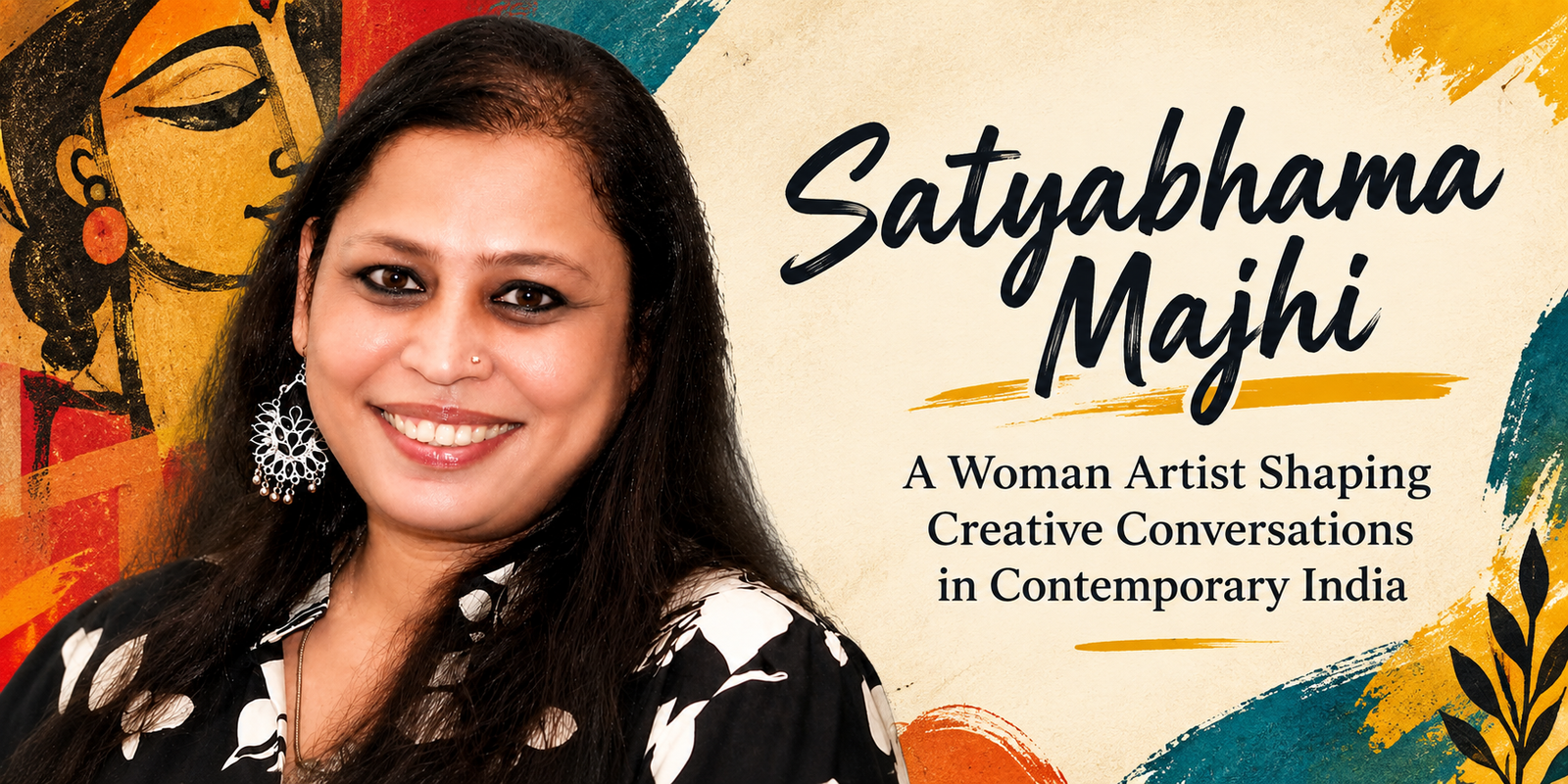
Contemporary Indian art is shaped by artists who are able to connect personal observation and local experience with larger cultural conversations. Satyabhama Majhi represents this approach through a multidisciplinary practice rooted in Odisha while engaging with communities, public spaces, traditional knowledge and national artistic platforms.
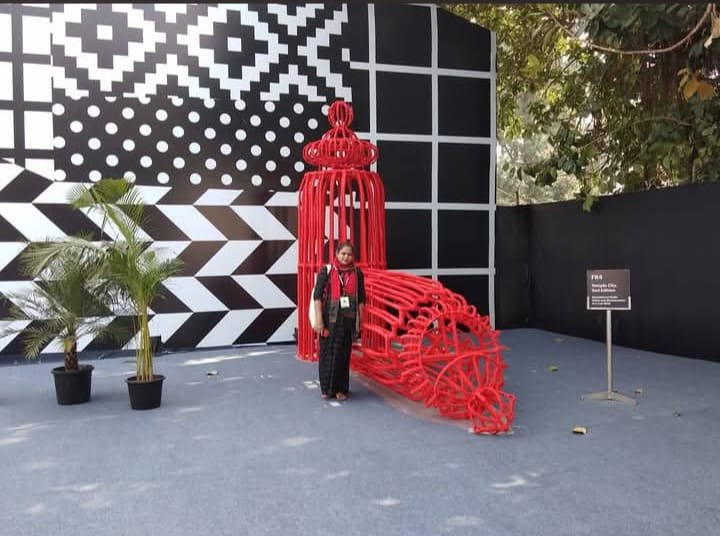
Based in Bhubaneswar, Odisha, Majhi works across painting, sculpture, installation, photography, mixed media, public art and community-based practice. Her artistic journey demonstrates how experiences gathered from particular places and communities can become part of wider discussions about culture, identity, ecology and contemporary life.
Her work does not depend on separating the local from the national. Instead, she explores how regional experiences can contribute to a broader understanding of Indian cultural diversity.
Rooted in Odisha
Odisha has provided an important foundation for Majhi’s artistic development.
The state contains diverse cultural traditions, indigenous communities, rural environments, rapidly developing cities and longstanding visual practices. Growing and working within this environment has given her opportunities to observe the relationship between cultural continuity and social change.
Bhubaneswar, where she is based, offers a particularly interesting setting. The city combines historical and cultural influences with the realities of contemporary urban development.
Majhi’s artistic observations have emerged from this environment, but her practice has gradually expanded beyond the immediate surroundings of the city.
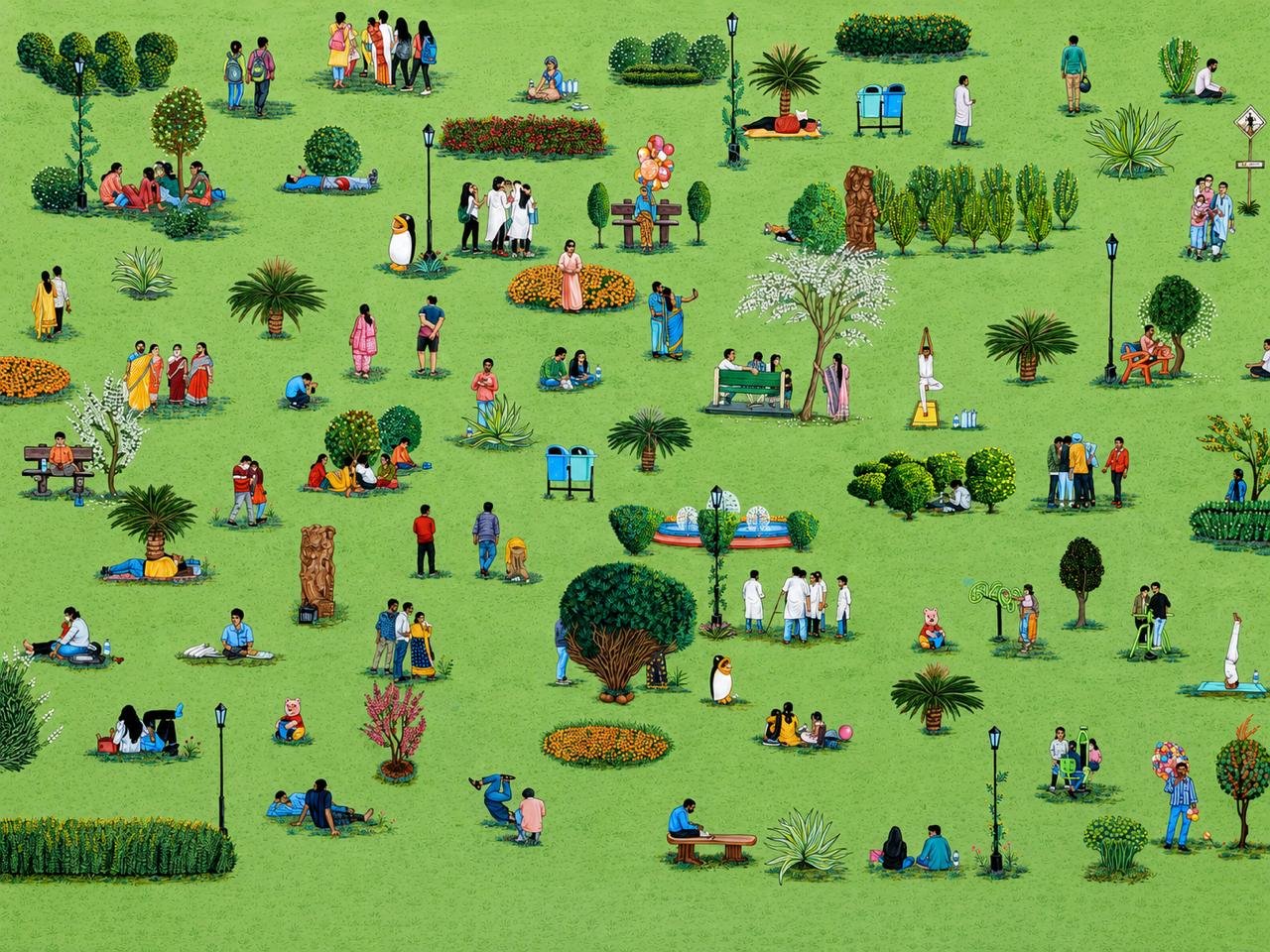
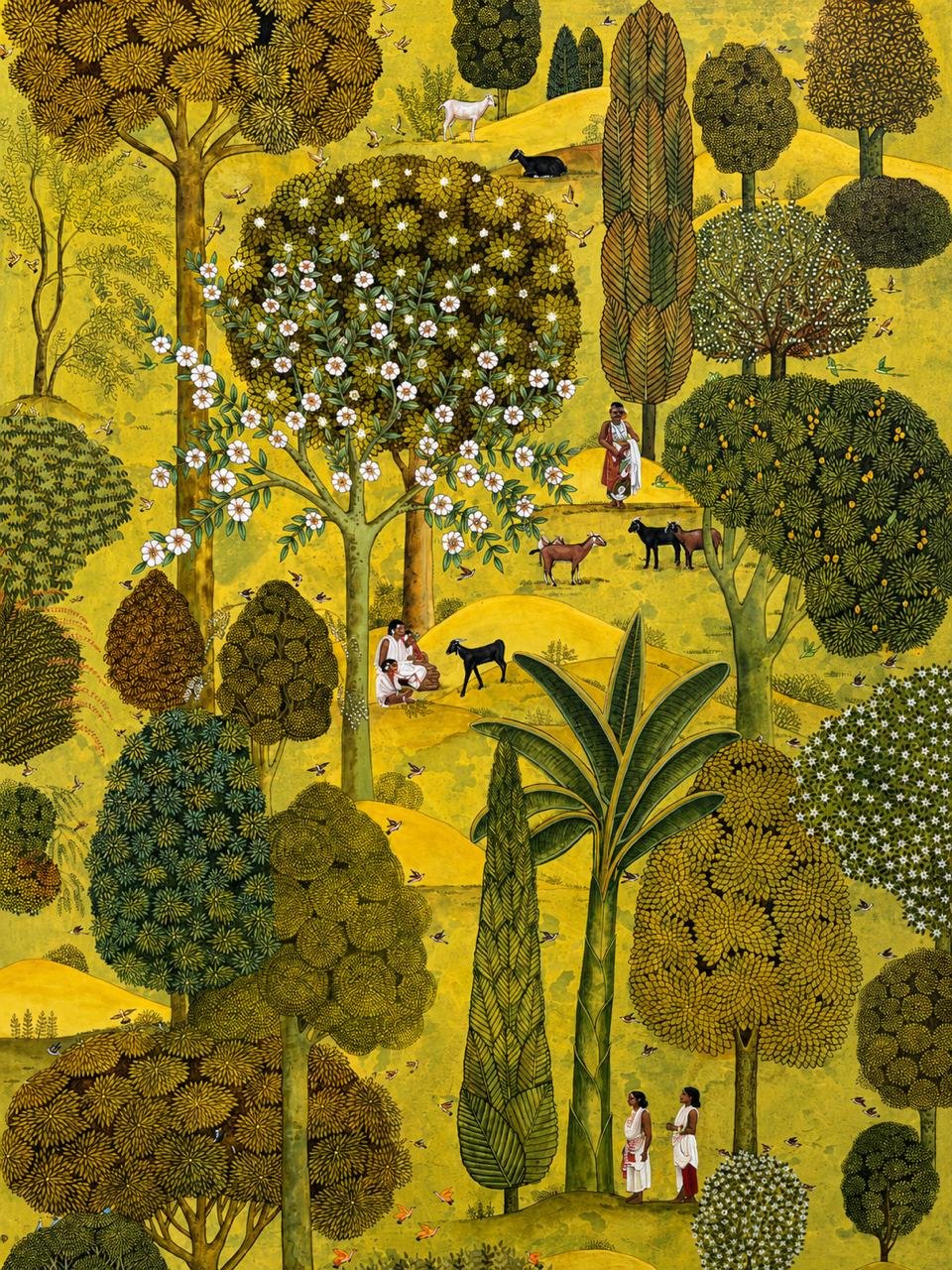
From Observation to Artistic Expression
Observation is an important part of Majhi’s approach.
Instead of beginning only with predetermined artistic concepts, she engages with people, environments and everyday experiences. These encounters can later become subjects, symbols, materials or ideas within her work.
This process allows local experiences to influence contemporary artistic expression.
A landscape can become a visual symbol. A traditional material can become part of a modern artwork. A community experience can inspire a public-art project. An ordinary scene can become a reflection on wider social change.
Through this transformation, the local becomes a starting point for broader artistic conversations.
Learning From Indigenous Cultural Traditions
Majhi’s sustained engagement with the Dongaria Kondh community is particularly significant within this context.
Her interaction with the community has extended over more than a decade and has involved attention to cultural practices, livelihood patterns, indigenous visual traditions and relationships with the natural environment.
Such engagement has influenced aspects of her artistic vocabulary.
The experience of Niyamgiri, for example, has contributed to her exploration of landscape, geometry and natural materials.
Importantly, her practice approaches indigenous culture through engagement and observation rather than simply treating it as a visual subject.
This creates a more thoughtful relationship between contemporary artistic practice and traditional knowledge.
Niyamgiri as a Regional Experience
Niyamgiri provides an example of how a specific regional landscape can generate ideas with wider relevance.
The hills are connected with the lives, cultural practices and environmental relationships of the communities living there. For Majhi, the region has therefore offered more than visual inspiration.
Her work has explored the connections between landscape, livelihood, movement, cultural memory and identity.
The recurring triangular form associated with the Niyamgiri hills is one example of this process. The form can suggest the silhouette of the mountains while also carrying broader associations with stability, sacred geography and cultural meaning.
A regional landscape thus becomes part of a visual language that can communicate with audiences beyond the region itself.
Natural Materials and Cultural Context
Majhi’s exploration of natural pigments provides another connection between local experience and contemporary practice.
Materials such as turmeric, charcoal, chalk stone, geru soil and brown stone can be processed into pigments and used with suitable binders.
These materials are closely associated with the natural environment and traditional forms of knowledge.
When incorporated into contemporary artworks, they create a dialogue between material history and modern artistic experimentation.
The result is not simply a return to traditional techniques. Instead, traditional materials become part of an evolving contemporary vocabulary.
The Urban and the Rural
Majhi’s artistic practice moves between urban and rural environments.
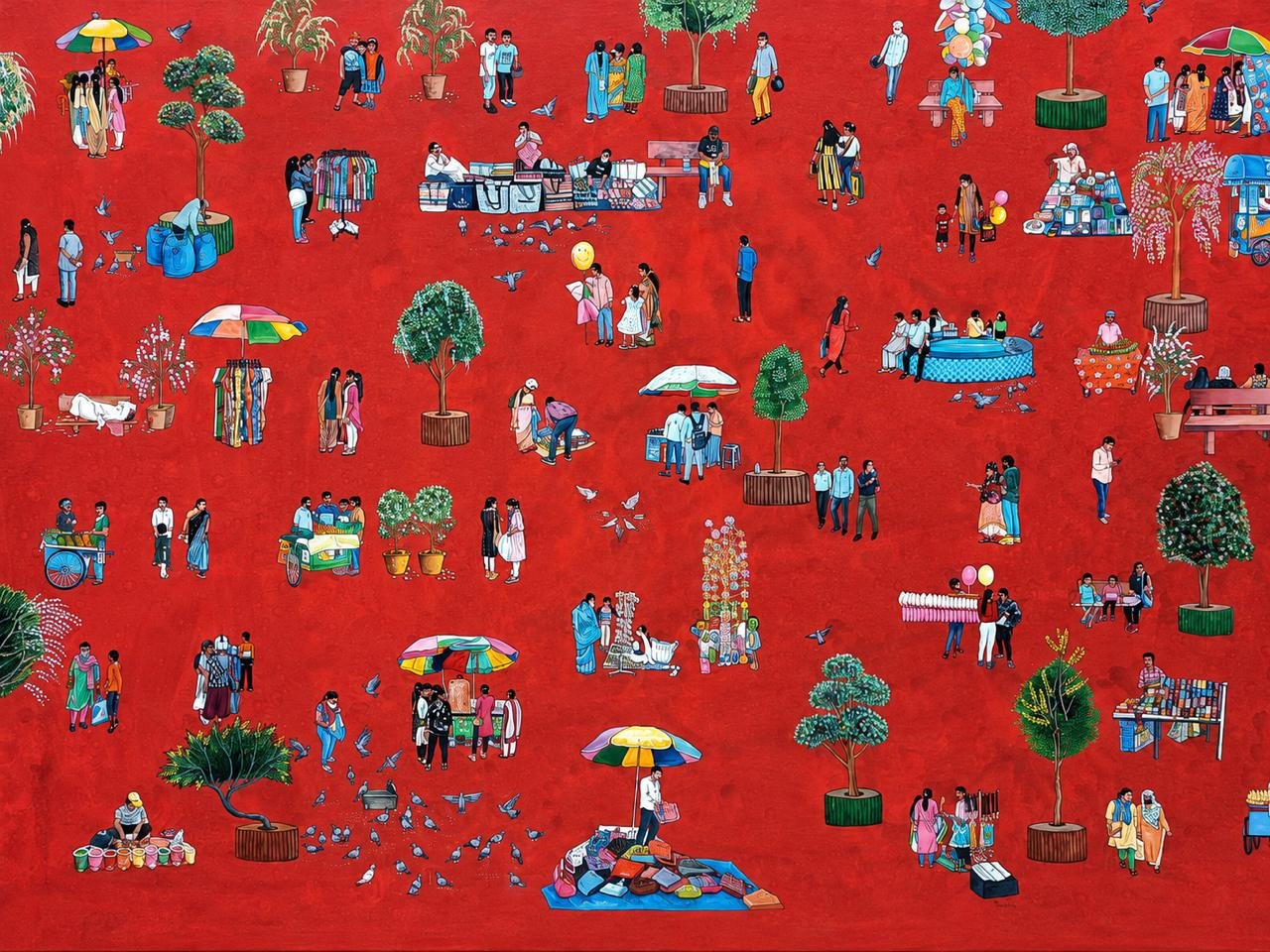
Her interest in urban life reflects changing cities and the experiences of people living within them. At the same time, her work with rural and indigenous communities provides insight into different relationships with land, tradition and collective life.
This movement between environments broadens her artistic perspective.
It allows her to consider how modernization affects different communities and how cultural knowledge adapts to changing circumstances.
Rather than presenting urban and rural life as completely separate categories, her work suggests that they are connected through processes of social and environmental change.
Public Art as a Wider Platform
Public art has provided Majhi with an important way of taking artistic ideas beyond traditional gallery spaces.
Her involvement in murals and public-art initiatives in Odisha has placed artistic expression within everyday environments.
Projects associated with public spaces in Cuttack and Bhubaneswar, along with murals connected with sporting and cultural events, have allowed art to reach audiences who may not regularly visit galleries.
Public art therefore becomes an accessible cultural platform.
A wall, street or public space can become a place where artistic expression intersects with the daily lives of communities.
Connecting Communities Through Art
Community participation further expands the reach of Majhi’s practice.
Her workshops and collaborative projects with children, schools, rural communities and other groups demonstrate an understanding of art as a participatory activity.
This approach creates opportunities for people to contribute their own experiences and perspectives.
The artist becomes not only an individual creator but also a facilitator of cultural exchange.
Such projects can help bring different forms of knowledge into conversation and demonstrate that artistic creativity exists beyond conventional art institutions.
Art Education and the Next Generation
Majhi’s work with children is another example of how local experiences can be transformed into wider cultural learning.
Over approximately 15 years, she has participated in art education and workshops involving children and educational communities.
Her approach encourages children to draw from observation, memory and personal experience.
Everyday subjects—trees, animals, household activities, festivals, village journeys and familiar environments—can become meaningful artistic material.
This approach helps young participants recognise the cultural and emotional value of their own surroundings.
It also demonstrates how art education can contribute to preserving and reinterpreting local experiences for future generations.
People’s Wall and the National Stage
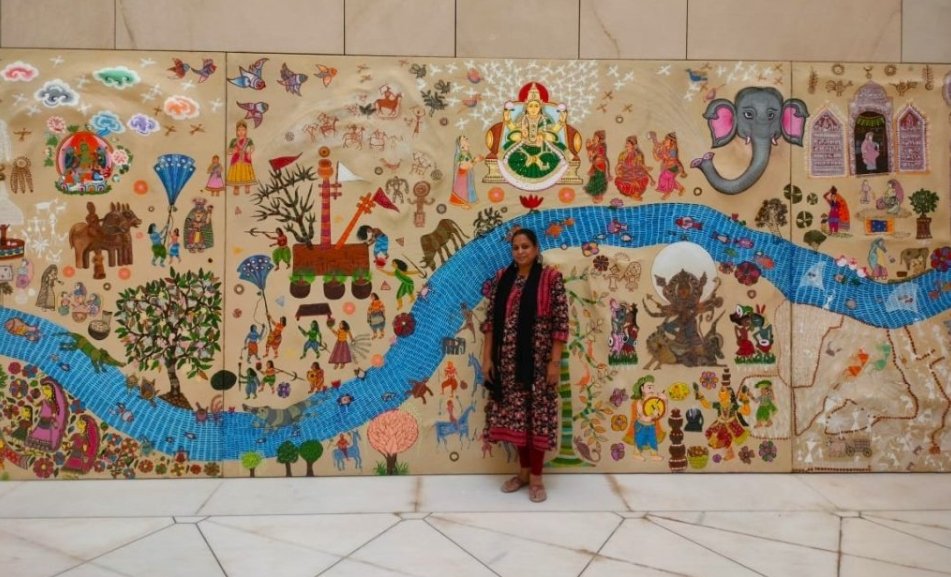
Majhi’s participation in People’s Wall – Jan, Janani and Janmabhumi in 2023 represents an important transition from regional artistic experience to a national cultural platform.
Created for the New Parliament House through Lalit Kala Akademi, New Delhi, the project brought together women artists and artisans representing different regions of India.
Majhi served as a Co-Sutradhar and creative contributor.
The project created an opportunity for regional artistic traditions to become part of a major national cultural setting.
It demonstrated that India’s cultural identity can be represented through multiple artistic languages rather than through a single visual tradition.
For an artist whose practice is deeply connected with local environments and communities, participation in such a project provided a significant platform for bringing regional perspectives into a national context.
The Importance of Cultural Diversity
India’s artistic identity is inherently diverse.
Different regions have developed distinctive materials, techniques, symbols, crafts and cultural traditions. Contemporary art can provide a space where these different forms of knowledge meet new ideas.
Majhi’s work contributes to this process by maintaining connections with Odisha while engaging with broader artistic networks.
Her exhibitions, residencies, public-art projects and collaborative initiatives have allowed her regional experiences to enter wider conversations.
This movement is important because cultural diversity becomes stronger when local traditions are not isolated but allowed to participate in contemporary dialogue.
The Artist as a Cultural Connector
Majhi’s roles as artist, curator, community art practitioner and cultural facilitator reflect this broader function.
Her work involves more than producing individual artworks. It also includes creating opportunities for artists, artisans, children and communities to interact through creative activities.
Through initiatives associated with the Sasatwa Foundation and other collaborative settings, she has contributed to cultural and community-oriented activities.
This expands the role of the contemporary artist from creator to connector.
Local Identity in Contemporary India
One of the central questions raised by Majhi’s practice is how local identity can remain meaningful within a rapidly changing society.
Urban development, technological change and shifting lifestyles can alter the way people experience their surroundings. Yet cultural memory, traditional knowledge and regional identity continue to influence contemporary life.
Majhi’s work brings these different dimensions together.
Her practice suggests that being rooted in a particular culture does not prevent an artist from participating in national or international conversations.
Instead, local experience can provide the depth from which broader artistic ideas emerge.
Conclusion
Satyabhama Majhi’s artistic journey demonstrates how local experience can become a powerful foundation for national cultural dialogue.
Her connection with Odisha, engagement with Niyamgiri and the Dongaria Kondh community, interest in natural materials, exploration of urban life, public-art projects and educational initiatives all contribute to a practice that moves across geographical and cultural boundaries.
Her participation in the People’s Wall project at the New Parliament House further illustrates how regional artistic perspectives can become part of national cultural expression.
Through her multidisciplinary practice, Majhi shows that contemporary Indian art does not have to choose between tradition and innovation, or between local identity and national visibility.
Instead, these elements can coexist.
Her work demonstrates how an artist can remain attentive to particular landscapes, communities and cultural memories while using contemporary artistic forms to communicate with wider audiences. In doing so, Satyabhama Majhi’s practice becomes an example of how local knowledge can contribute to India’s evolving national cultural conversation.