
Indian classical dance is built upon centuries of knowledge, discipline and artistic transmission. Behind every performance are teachers, choreographers, musicians, researchers and practitioners whose contributions help keep these traditions alive. As digital technology changes the way performances and creative material are shared, questions of copyright and artistic ownership have become increasingly important.
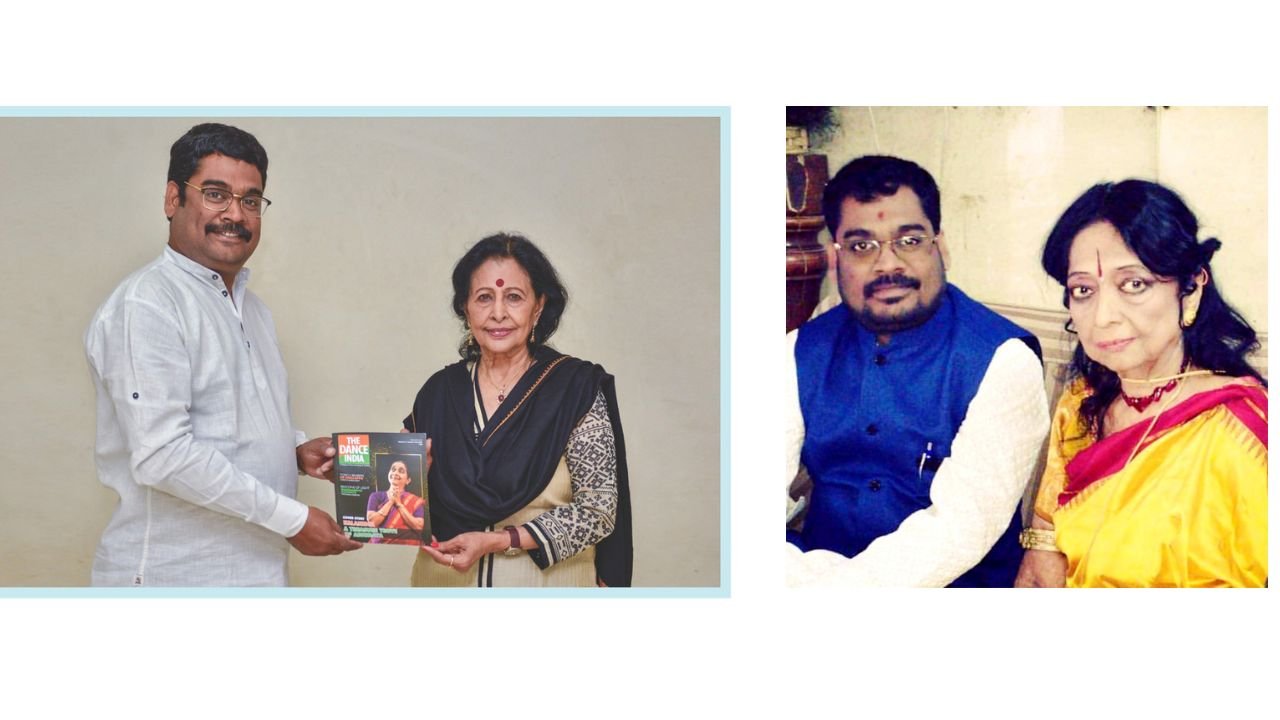
For Vikram Kumar B R, popularly known as Bathina Vikram Goud, awareness of intellectual property is an important part of responsible cultural practice.
A Kuchipudi artiste, choreographer, theatre director, researcher, cultural organiser and editor, Vikram Kumar has worked across several areas of the performing arts. His experience has led him to emphasise that promoting culture should also mean respecting the people whose creative efforts contribute to it.
Classical Tradition and Modern Creativity
Indian classical dance is a traditional art form, but it is not a static art.
Artists continue to interpret established repertoire, create choreographic productions and develop new presentations based on traditional material.
This creates an important distinction between inherited cultural vocabulary and an individual’s creative contribution.
A traditional movement may belong to a long-established artistic system, while a particular sequence, production structure, choreography or interpretation may represent the creative work of a contemporary artist.
According to Vikram Kumar’s cultural advocacy, recognising this distinction is essential for maintaining fairness within the artistic community.
Why Choreographers Deserve Recognition
Choreography involves much more than arranging movements.
A choreographer may spend considerable time researching a subject, selecting music, developing sequences, designing formations and deciding how a story should be communicated through dance.
Large thematic productions can require coordination among dancers, musicians, costume designers, technical teams and other creative contributors.
When elements of such work are copied without acknowledgement, the creative effort behind the production can become invisible.
Vikram Kumar has therefore advocated greater awareness of copyright and intellectual property among artists and cultural organisations.
The Digital Era Has Changed the Challenge
Earlier, copying a stage production or artistic publication required considerable effort.
Today, a performance can be recorded and shared almost instantly.
Photographs can be downloaded and reposted. Articles can be reproduced on other websites. Video clips can circulate through social media without the original source remaining visible.
The convenience of digital technology has therefore created a new responsibility for users.
Cultural material may be easily accessible, but accessibility does not automatically mean that creators have surrendered their rights.
Respecting Written Work
Copyright concerns also extend beyond choreography.
Cultural journalism, research articles, artist biographies and historical documentation require intellectual effort.
Vikram Kumar’s work as an editor has given him direct experience with cultural publishing.
Through The Dance India, he has contributed to the publication and documentation of Indian dance-related material.
For cultural journalism to remain meaningful, the identity of writers, researchers, photographers and artists needs to be preserved alongside the material they create.
Photography and Archival Material
Photographs and recordings are another important part of cultural documentation.
A photograph of a classical dancer may eventually become an important historical record. A video recording may preserve a particular interpretation or performance that future researchers could study.
If such material is circulated without attribution, valuable information about its origin can disappear.
Vikram Kumar’s wider emphasis on documentation therefore connects closely with the question of ownership.
Preserving an artistic record should also mean preserving information about the people responsible for it.
Copyright as a Professional Responsibility
Copyright awareness is not only a legal issue.
It can also be viewed as an ethical responsibility within the artistic community.
Artists benefit from acknowledging the work of others. Students learn from teachers and established traditions. Choreographers draw upon existing cultural knowledge while adding their own creative interpretation.
Recognising these relationships creates a culture of respect.
For young dancers in particular, understanding copyright can help establish professional habits at an early stage of their careers.
Educating the Next Generation
Training in classical dance traditionally focuses on technique, rhythm, expression and repertoire.
However, the modern professional environment requires additional knowledge.
Young artists increasingly need to understand digital publishing, social media, performance recordings, photography and the use of creative material.
They also need to know the importance of giving credit to choreographers, musicians, writers and other contributors.
Vikram Kumar’s advocacy suggests that cultural education should evolve alongside the changing environment in which artists work.
Preservation Requires Authentic Sources
Copyright and preservation may appear to be separate issues, but they are closely connected.
Future generations need access to reliable sources if they are to study the development of Indian classical dance.
If performances are repeatedly copied without identifying their creators or original sources, the historical record can become increasingly difficult to trace.
Proper attribution helps preserve the chain of information.
Researchers can identify the original artist, production, choreographer, publication or archive and understand how a particular work developed.
Protecting Creativity Without Restricting Tradition
At the same time, protecting copyright should not prevent legitimate cultural learning.
Indian classical arts have survived because knowledge has been transmitted from one generation to another.
Students must be able to study traditional techniques and repertoire.
The challenge is to protect individual creative contributions while keeping traditional knowledge available for responsible learning and cultural continuity.
Vikram Kumar’s approach seeks this balance.
The objective is not to isolate cultural knowledge but to encourage responsible use of it.
The Role of Cultural Institutions
Cultural organisations can help create greater awareness.
Academies, festivals and publications can educate participants about attribution and intellectual property.
The Nataraj Music and Dance Academy, founded by Vikram Kumar in 2000, is part of his wider institutional work in Indian performing arts.
Through training, competitions, workshops and festivals, cultural institutions can introduce young performers to the broader responsibilities of being an artist.
Festivals and Creative Ownership
Festivals also bring copyright issues into focus.
A festival may involve original choreography, commissioned performances, photographs, promotional content, recordings and written material.
Properly identifying artists and creators can help ensure that cultural events become reliable records of artistic contribution.
For Vikram Kumar, festivals should not merely provide entertainment. They can also contribute to documentation and preservation.
Building a Culture of Attribution
One of the simplest ways to strengthen artistic ownership is to make attribution a normal part of cultural communication.
The name of the choreographer can accompany a performance. The photographer can be identified when an image is published. Authors can be credited for articles. Researchers can identify their sources.
Such practices help create a culture in which creative contribution is visible.
They also teach audiences to understand that cultural material has a history and creators behind it.
The Importance of Intellectual Property Awareness
For an artist working across performance, choreography, publishing and cultural organisation, intellectual property is not an abstract subject.
It affects everyday artistic activity.
A choreographer creates. A dancer interprets. A writer documents. A photographer records. A researcher investigates. A cultural organisation provides the platform.
Each contribution can become part of the historical record.
Protecting those contributions helps ensure that cultural history remains connected to the people who shaped it.
A Wider Vision for Indian Classical Arts
Vikram Kumar B R’s position on copyright forms part of a much broader cultural philosophy.
He has advocated preserving not only dance movements but also repertoire, music, literature, choreography, biographies, performance practices and documentation.
This approach views classical arts as a complete knowledge ecosystem.
Within that ecosystem, artistic ownership becomes important because knowledge should retain its context and creators should receive appropriate recognition.
Preparing for the Digital Future
Digital platforms are likely to become even more important for Indian classical arts.
Online performances, digital archives, social media and streaming services can introduce traditional dance to audiences around the world.
These technologies can help preserve performances and expand access to cultural education.
But the long-term benefits will be greater if digital growth is accompanied by respect for creators.
Vikram Kumar’s advocacy highlights this responsibility.
A Message for Artists and Audiences
The question of copyright ultimately concerns both creators and consumers.
Artists need to understand and protect their creative contributions. Cultural organisations need responsible systems for handling creative material. Audiences and digital users need to recognise that publicly available content is not necessarily free from attribution or ownership considerations.
Such awareness can strengthen the professional environment surrounding Indian classical arts.
Preserving Tradition With Respect
For Vikram Kumar B R, copyright awareness is ultimately connected with cultural preservation.
Indian classical dance can continue to evolve, but its evolution should not erase the identity of its creators.
Traditional knowledge can be shared, while contemporary creative contributions can still be acknowledged.
In the digital age, this balance becomes increasingly important.
His advocacy therefore presents a straightforward cultural principle: Indian classical arts should remain open to learning and innovation, but the artists, choreographers, writers, photographers and researchers who contribute to that heritage should not disappear from its history.
By encouraging greater awareness of copyright and artistic ownership, Vikram Kumar seeks to strengthen not only the rights of individual creators but also the integrity, authenticity and continuity of India’s classical arts tradition.